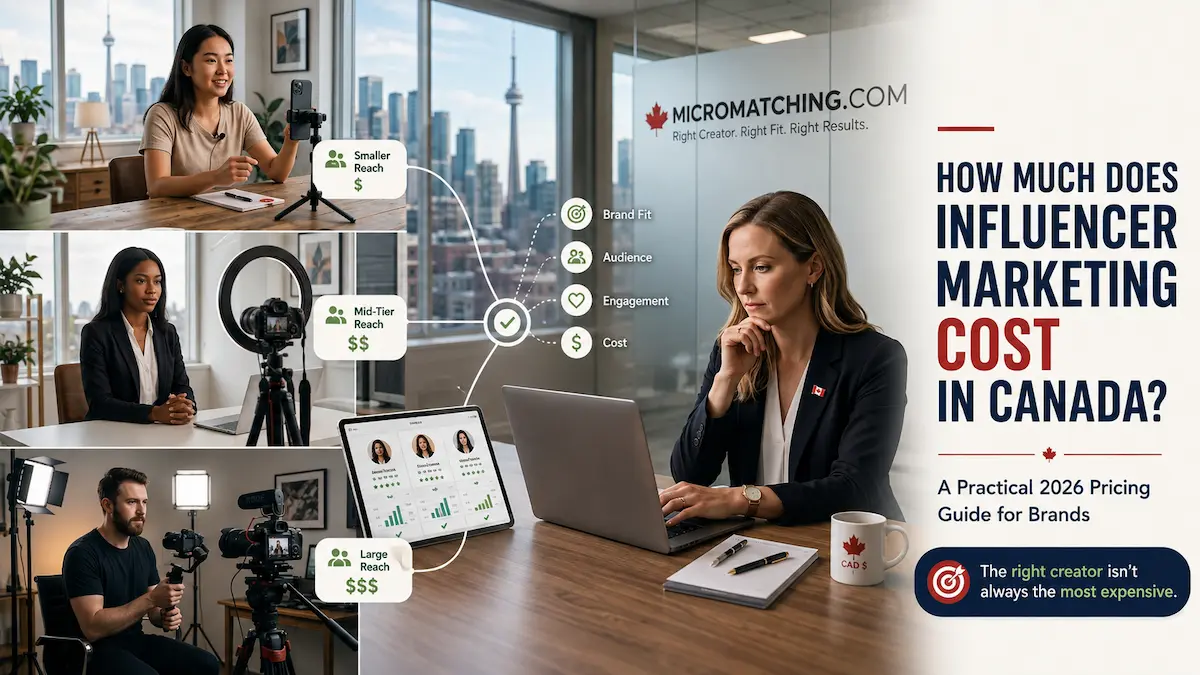
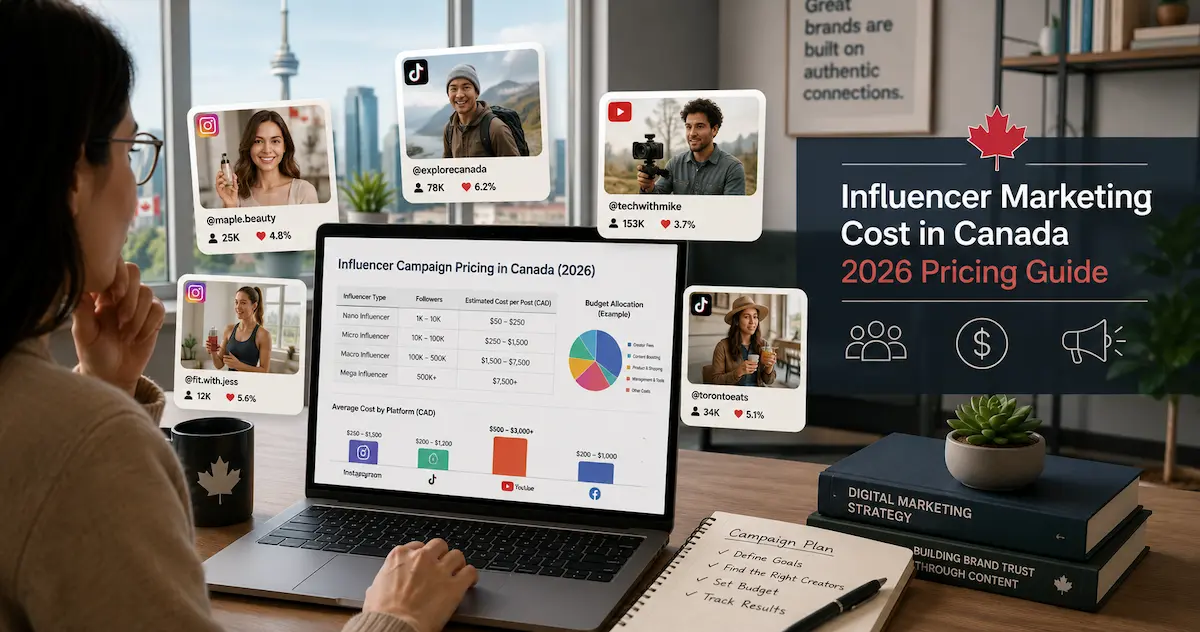
How Much Does Influencer Marketing Cost in Canada? (2026 Pricing Guide)
Influencer marketing has evolved from a trend into one of the most effective ways for Canadian businesses to connect with customers. Whether you're a startup in Toronto, a local retailer in Calgary, or an established eCommerce brand serving customers across Canada, partnering with the right creators can increase brand awareness, build trust, and generate measurable sales.
But before launching a campaign, one question almost every brand asks: How much does influencer marketing cost in Canada?
The answer isn't always straightforward. Prices vary depending on the creator's audience size, engagement rate, platform, content type, campaign goals, and the length of the partnership. While some micro influencers may charge less than CAD $200 for a sponsored post, larger campaigns involving multiple creators can cost several thousand dollars.
The good news is that brands no longer need massive marketing budgets to achieve meaningful results. Many businesses are discovering that working with smaller creators can deliver stronger engagement and better return on investment than traditional celebrity endorsements. Modern influencer marketing platforms such as micromatching businesses discover verified creators, manage collaborations, and measure campaign performance more efficiently.
In this guide, we'll break down the influencer marketing cost in Canada landscape, explain what affects pricing, and share practical tips to help you plan a campaign that fits your budget without compromising results.
Canadian influencer marketing campaigns can range from a few hundred dollars for smaller creator collaborations to several thousand dollars for larger campaigns. The final cost depends on audience size, engagement, platform, content format, campaign scope, exclusivity, and content usage rights.
For many small and medium-sized businesses, working with nano and micro influencers can provide a practical way to reach targeted audiences without requiring a large advertising budget.
Why Influencer Marketing Continues to Grow in Canada
Canadian consumers spend more time than ever on platforms like Instagram, TikTok, YouTube, and Facebook. Before making a purchase, many people look for authentic product recommendations from creators they already trust.
This shift in consumer behaviour has encouraged businesses of all sizes to include influencer marketing in their digital strategy. Unlike traditional advertising, influencer content often feels more personal, making it easier for brands to build genuine relationships with their audience.
Another reason for its growing popularity is accessibility. Businesses no longer need to work exclusively with celebrities. Thousands of Canadian micro influencers create engaging content for highly targeted communities, making it possible for smaller brands to compete effectively without overspending.
Influencer marketing is no longer limited to large brands or celebrity campaigns. Canadian businesses of different sizes can use smaller, relevant creators to reach focused audiences and build authentic relationships.
What Determines Influencer Marketing Costs?
There isn't a fixed price for influencer collaborations because every campaign is different. Several factors influence the final investment.
1. Audience Size
One of the biggest pricing factors is the creator's follower count.
Generally, influencers are grouped into four categories:
| Influencer Type | Typical Followers |
|---|---|
| Nano Influencer | 1,000–10,000 |
| Micro Influencer | 10,000–100,000 |
| Macro Influencer | 100,000–500,000 |
| Mega Influencer | 500,000+ |
While larger audiences often command higher fees, bigger doesn't always mean better. Brands increasingly choose smaller creators because their communities tend to be more engaged and responsive.
This is one reason micro influencer pricing in Canada has become such an important topic for marketing teams looking to maximize their advertising budgets.
2. Engagement Rate Matters More Than Followers
Imagine two influencers with 50,000 followers.
The first receives only a few hundred likes per post, while the second consistently generates thousands of comments, shares, and meaningful conversations.
Which creator offers better value?
Most experienced marketers would choose the second.
Brands today focus less on vanity metrics and more on engagement because active communities are far more likely to interact with sponsored content and convert into customers.
A creator with fewer followers but stronger engagement often delivers a better return on investment than someone with a much larger but less active audience.
3. Platform Selection
The platform you choose also affects campaign costs.
Each social media channel requires different levels of production, audience interaction, and content creation.
For example:
- Instagram remains one of the most popular choices for lifestyle, beauty, fashion, food, and travel brands.
- TikTok campaigns often emphasize short-form, creative videos that can generate rapid organic reach.
- YouTube collaborations generally require more planning and editing, making them more expensive.
- Facebook can still be valuable for local businesses targeting community audiences.
Because each platform serves different marketing objectives, the cost of hiring influencers will naturally vary depending on where your audience spends their time.
4. Content Format
Not every piece of sponsored content requires the same amount of work.
A simple Instagram Story usually costs less than a professionally produced YouTube review or a series of TikTok videos.
Common deliverables include:
- Sponsored posts
- Short-form videos
- Stories
- Product reviews
- Unboxing videos
- Giveaways
- Live streams
- Long-term ambassador programs
Campaigns that include multiple content formats generally require a larger investment but also provide more opportunities to reach customers throughout their buying journey.
5. Industry and Niche
Some industries naturally command higher influencer fees than others.
For example, creators specializing in finance, technology, luxury travel, real estate, or healthcare often charge more because they serve specialized audiences with strong purchasing power.
On the other hand, local food creators, fitness coaches, parenting bloggers, or community lifestyle influencers may offer more affordable collaboration opportunities while still delivering impressive engagement.
Choosing creators who align with your niche is often more valuable than simply selecting those with the largest audiences.
Why Micro Influencers Offer Better Value for Many Canadian Brands
Over the past few years, many businesses have shifted away from celebrity partnerships in favour of smaller creators.
The reason is simple.
Micro influencers trend to build stronger relationships with their followers. Their recommendations often feel genuine rather than promotional, which encourages higher engagement and greater trust.
For businesses with limited budgets, micro influencer pricing in Canada provides an attractive opportunity to reach targeted audiences without making a significant financial commitment.
Instead of investing an entire marketing budget in one high-profile creator, brands can collaborate with several micro influencers across different cities or niches, expanding their reach while reducing overall campaign risk.
Average Influencer Rates in Canada (2026)
One of the biggest questions brands ask is, "How much should I expect to pay an influencer?" While there's no universal pricing model, understanding typical market rates can help you set realistic expectations and negotiate confidently.
The table below provides estimated influencer rates in Canada based on common campaign types. Actual pricing may vary depending on the creator's niche, engagement rate, content quality, exclusivity requirements, and campaign scope.
| Influencer Type | Followers | Typical Price Per Sponsored Post (CAD) |
|---|---|---|
| Nano Influencer | 1K–10K | $50 – $250 |
| Micro Influencer | 10K–100K | $250 – $1,500 |
| Macro Influencer | 100K–500K | $1,500 – $7,500 |
| Mega Influencer | 500K+ | $7,500+ |
These figures should be viewed as general guidelines rather than fixed rates. Many creators offer package pricing, especially for long-term collaborations that include multiple posts, stories, or videos.
Platform-Wise Pricing Overview
Different social media platforms require different levels of effort and content production. As a result, campaign costs often vary from one platform to another.
Instagram continues to be one of the most popular platforms for influencer campaigns in Canada. Brands commonly collaborate with creators through feed posts, Reels, Stories, and carousel content.
Instagram is particularly effective for industries such as fashion, beauty, food, travel, wellness, and lifestyle.
TikTok
TikTok rewards creativity and authenticity. A short, engaging video can generate significant organic reach, making it an attractive option for brands with limited budgets.
Many businesses now allocate a larger share of their marketing budget to TikTok because of its potential to deliver strong engagement at a relatively affordable cost.
YouTube
YouTube collaborations generally involve more planning, filming, editing, and storytelling. While YouTube campaigns tend to cost more, they also offer longer content lifespan and deeper audience engagement.
For products that require demonstrations, tutorials, or detailed reviews, YouTube often provides excellent long-term value.
Understanding Micro Influencer Pricing in Canada
Micro influencers have become a preferred choice for many Canadian businesses, especially small and medium-sized companies looking to maximize their marketing investment.
Unlike celebrity creators, micro influencers usually focus on specific communities or interests. Their audiences often trust their recommendations because their content feels genuine and relatable.
This is why micro influencer pricing in Canada has become an important consideration for brands seeking measurable results without overspending.
Instead of investing thousands of dollars in a single high-profile creator, many businesses choose to work with several micro influencers across different locations or niches. This diversified approach increases brand visibility while reducing campaign risk.
The best creator is not necessarily the creator with the largest audience. Relevance, engagement, audience fit, content quality, and campaign objectives should all be considered alongside the creator's fee.
How to Budget for Your First Influencer Campaign
Planning an influencer campaign starts with defining a clear objective. Before setting a budget, consider what you want to achieve. Your goals will influence the type of creators you work with, the platforms you choose, and the overall campaign investment.
- Increase brand awareness
- Drive website traffic
- Launch a new product
- Generate online sales
- Build user-generated content
Once you've identified your primary goal, allocate a realistic budget that includes creator fees as well as supporting expenses such as product shipping, content promotion, and campaign tracking. Starting with a small campaign and measuring results before scaling is often the most effective approach for brands new to influencer marketing.
Tips to Reduce the Cost of Hiring Influencers
A successful campaign isn't always the one with the largest budget. Smart planning often delivers better results than simply spending more.
Here are a few ways to manage the cost of hiring influencers effectively:
Choose Quality Over Quantity
A highly engaged creator with a smaller audience often delivers better performance than a larger account with low interaction.
Build Long-Term Relationships
Ongoing partnerships typically provide better pricing than one-time sponsored posts. Long-term collaborations also create greater trust among audiences.
Focus on Relevant Niches
Selecting creators whose audience closely matches your target market often leads to stronger engagement and higher conversion rates.
Give Creative Freedom
Influencers understand what resonates with their followers. Allowing them to communicate your message in their own style often produces more authentic and effective content.
Looking for more practical strategies? Explore our guide on How to Build an Effective Influencer Marketing Strategy.
Common Pricing Mistakes Brands Should Avoid
Many first-time advertisers make avoidable mistakes that reduce campaign performance.
Some of the most common include:
- Choosing influencers based only on follower count
- Ignoring engagement quality
- Failing to define campaign objectives
- Working without a written agreement
- Overlooking content usage rights
- Not tracking campaign performance
- Expecting immediate sales from every collaboration
Successful influencer marketing is built on strategy, transparency, and continuous optimization.
Learn about other common mistakes in our article on Influencer Marketing Mistakes to Avoid.
Why the Right Platform Matters
Managing influencer campaigns manually can quickly become time-consuming, especially when you're working with multiple creators.
A dedicated platform simplifies the process by helping brands:
- Discover creators that match their target audience
- Review profiles and engagement metrics
- Manage creator collaborations
- Organize campaign workflows
- Track campaign performance more efficiently
Manage Collaborations More Efficiently
Instead of relying on spreadsheets and endless email threads, businesses can streamline their workflow and make more informed decisions throughout the campaign.
Explore MicroMatching's platform for brands to discover a more structured way to manage micro-influencer campaigns.
Frequently Asked Questions
How much does influencer marketing cost in Canada?
Campaign costs vary depending on the influencer's audience size, platform, content type, and campaign requirements. Small collaborations may start at a few hundred dollars, while larger campaigns can require several thousand dollars.
Why are micro influencers becoming more popular?
Micro influencers often have highly engaged communities and niche audiences. Their recommendations tend to feel more authentic, making them an attractive option for brands seeking better engagement and value.
What affects influencer pricing the most?
Factors such as audience size, engagement rate, platform, content format, campaign duration, exclusivity, and industry all influence pricing.
Is influencer marketing suitable for small businesses?
Yes. Many small businesses successfully partner with nano and micro influencers to increase local visibility, build trust, and reach targeted audiences without requiring a large advertising budget.
How can brands measure campaign success?
Success can be measured using metrics such as reach, engagement, website traffic, lead generation, conversions, sales, and overall return on investment.
Final Thoughts
Influencer marketing has become an essential part of the digital marketing mix for businesses across Canada. While pricing varies widely, understanding the factors that influence campaign costs allows brands to make smarter decisions and invest their budget more effectively.
Rather than focusing only on the lowest price, consider the overall value a creator can bring. Authentic partnerships, strong audience engagement, and clear campaign objectives often produce better long-term results than simply choosing the largest influencer available.
Whether you're planning your first collaboration or looking to scale your influencer strategy, taking a thoughtful, data-driven approach will help you build campaigns that deliver meaningful business outcomes.
Ready to Launch Your Next Influencer Campaign?
Finding the right creators doesn't have to be complicated.
MicroMatching helps brands discover verified creators, connect with the right audiences, and manage influencer campaigns more efficiently—all from a single platform. Whether you're exploring your first collaboration or expanding an existing strategy, MicroMatching makes it easier to build partnerships that support your marketing goals.